Team
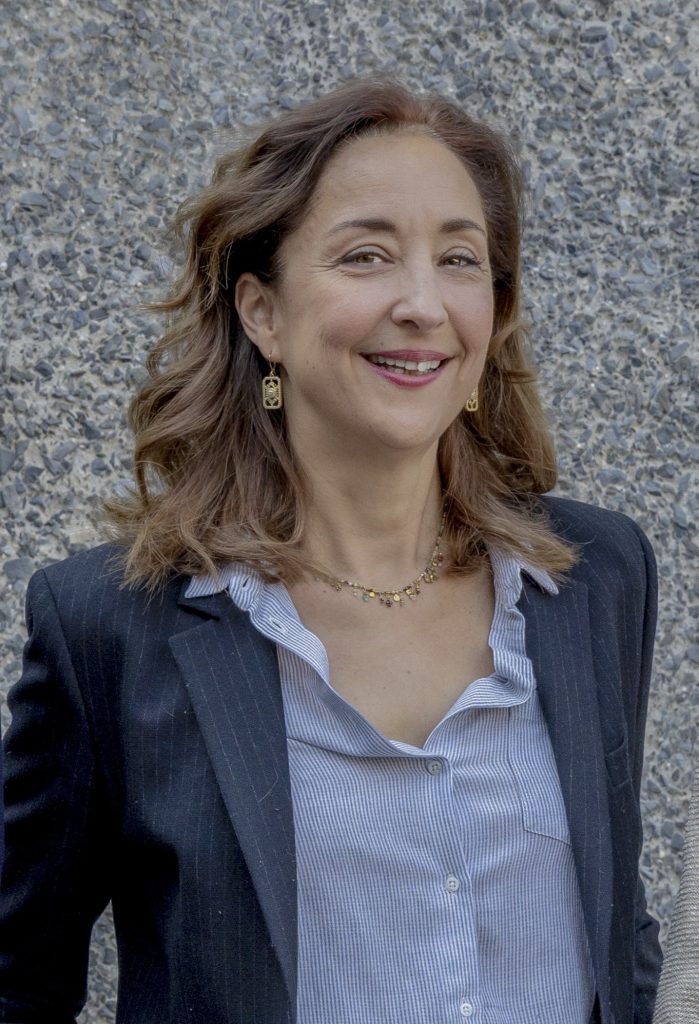
Éloïse Brac de la Perrière is professor of Islamic art history and archaeology at Sorbonne University (Faculty of Letters) and scientific advisor at the Institut national d’histoire de l’art, where she directs projects spanning the period from the 4th to 15th century. She is a statutory member of the research groups UMR 8169 – Orient et Méditerranée and UMR 5648 – CIHAM (Lyon), and is also vice director of doctoral studies in art history and archaeology (ED 124) at Sorbonne University.
As an Arabist and Persianist, her approach blends analysis of textual sources with the material study of artworks. Her research focuses on the social and material history of artistic practices in the Islamic world’s frontier zones (India, China, southeast Asia, sub-Saharan Africa, Anatolia, the Balkans), with particular attention on workshop practices, the circulation of forms, and the uses of writing and the image. She directs the ANR project CallFront – Calligraphies aux frontières du monde islamique, dedicated to processes of artistic transformation in contact zones.
Drawing upon deep field-research experience in difficult-to-access areas, she founded RePaZ – Recherche et Patrimoine en Zones de crises, a program based at the Institut national d’histoire de l’art, which she oversees alongside Sandra Aube (CNRS).
Sandra Aube is a research associate at the CNRS-funded Centre de recherche sur les mondes iraniens. As an art historian specializing in the medieval Iranian world, her research primarily concerns architectural decoration and modes of transmitting savoir-faire. Since 2022, she has directed the CNRS Area Studies unit, and is assistant director of GIS Moyen-Orient et mondes musulmans, through which she co-directed a position paper on French studies of the Iranian world as well as the “Terrains contraints” mission.
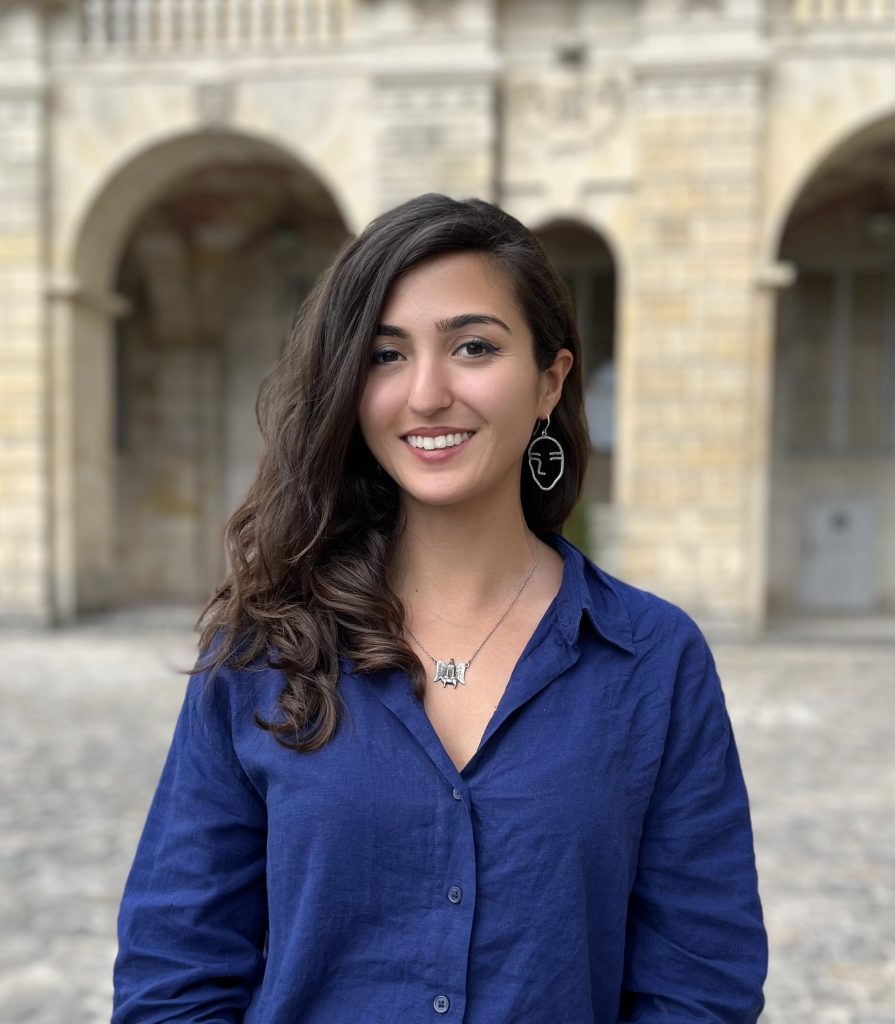
Sipana Tchakerian is a scientific coordinator at the INHA, where she is in charge of coordinating the research unit Recherche et Patrimoine en Zones de crises (RePaZ) and is pursuing a research and digitization project on the archives of Nicole and Jean-Michel Thierry.
A specialist of medieval Armenian and Georgian architecture and monumental arts, she defended a doctoral dissertation in 2022 (at Paris 1 / Aix-Marseille) devoted to the region’s late antique monumental crosses. Her research concerns art and architecture related to the cult of the Cross in the south Caucasus, paying particular attention to pilgrimage as it developed between the 4th and 8th centuries. She is part of the “Monde byzantin” team of UMR 8167 Orient & Méditerranée and associate member of UMR 7298 Laboratoire d’Archéologie Médiévale et Moderne en Méditerranée.
In parallel, Sipana Tchakerian handles the scientific coordination of a 3D-documentation and modeling project of Armenian architectural heritage in Armenia and Artsakh / Nagorno-Karabakh, run by the Armenian Cultural Heritage Institute (Erevan), and contributes to the development of digital research tools on Armenian monuments in the framework of the project MoNumEd. She is a member of the Comité Français d’Études Byzantines (CFEB), Association Internationale des Études Arméniennes (AIEA), Armenian Society of Fellows (ASOF), and Association des Études Asiatiques et Caucasiennes (ASIAC).
Eva Portel is a postdoctoral researcher at the Centre André Chastel and member of the RePaZ project. She received her doctorate in political science and is an affiliate member of the Centre Emile Durkheim (Sciences Po Bordeaux).
Her dissertation studied attacks on cultural heritage carried out by the Islamic State in Iraq and Syria (2014–19) with particular attention on military strategy and armed conflict. As an Arabist, she is interested in the methodological challenges that inaccessible areas pose for research and cultivates a methodology adapted to the study of destruction of cultural goods.
Her publications include, notably, an article in the journal Études internationales (vol. 55, no. 3, 2024), titled “L’État islamique et le patrimoine culturel : entre destruction et construction d’un État.”; and a contribution to the platform The Rubicon titled “Penser la place du patrimoine culturel dans un conflit armé.”
Additionally, Eva Portel has contributed to activities for the doctoral group AEGES and the social media channels of the International Studies Association’s ethics section.
Elsa Guyot is an art historian, holding a joint doctorate from the Université de Montpellier Paul-Valéry and the Université de Montréal. Winner of the France-Québec Thesis Prize, she has conducted research on the collection and exhibition of medieval art in Quebec, through the analysis of political, religious, and identitarian discourses that underlie these practices. More broadly, she is interested in the political and ideological uses of the past as well as the role that museums play in the process of heritage-making.
A revised version of her dissertation was published in 2021 with Éditions Leméac under the title Rejouer l’histoire: Le Moyen Âge dans les musées du Québec. She was a postdoctoral research fellow at the Université du Québec à Montréal (UQAM), as part of the Digital Laboratory for the Study of Art History in Quebec, where she contributed to the development of a database by studying art-exhibition archives.
Her career bridges France with Canada, where she has carried out research, taught courses (in university, art school, and college-preparatory settings), and coordinated both scientific and artistic events (colloquia, temporary exhibitions, art fairs).
At the Institut national d’histoire de l’art, she is part of two programs: RePaZ and CallFront, for which she is in charge of coordinating research and outreach activities, the distribution of a documentary film, as well as the project management of scientific publications.
Matthias Egger is a doctoral candidate at the École Pratique des Hautes Études – Université Paris Sciences et Lettres, in concert with the Sapienza University of Rome, under the joint supervision of Ioanna Rapti and Paola Buzi, and is a member of UMR 8167 Orient & Méditerranée – Monde Byzantin. The recipient of a doctoral contract at the Institut national d’histoire de l’art, he is a member of the program CallFront, directed by Éloïse Brac de la Perrière. He regularly collaborates with the RePaZ research unit as well as a research and valorization project dedicated to the archives of Nicole and Jean-Michel Thierry preserved at the INHA.
His dissertation, titled L’enluminure copte (VIIIe – XIXe siècle): économie, sémantique, identité, addresses the illuminated Coptic manuscript tradition from the first centuries of Islamic Egypt through the introduction of printing in the country, through a corpus of Coptic and Arabo-Coptic gospels produced in Cairo and nearby monasteries. It considers the visual gestures that mark and accompany the production of these sacred objects, while questioning the copy, use, and transmission of these books over the centuries, as well as the network of actors that created and collected them.
Matthias Egger studied art history and archaeology at the École du Louvre as well as EPHE–PSL, where he received a master’s in art history and archaeology and wrote a thesis on a Coptic gospel manuscript kept at the Bibliothèque nationale de France. In parallel with his university training, in 2023 he carried out a project to catalog Coptic manuscripts kept at the Institut Français d’Archéologie Orientale in Cairo, and contributed in 2024 to the inventory of the archives of Nicole and Jean-Michel Thierry at the INHA.
Camille Grandpierre is a doctoral candidate at Sorbonne University, under the joint supervision of Éloïse Brac de la Perrière and Alexandre Papas. She is a member of UMR 8150 Centre André-Chastel and UMR 8032 CETOBac.
Holding a doctoral contract at the Institut national d’histoire de l’art (INHA) since 2024, she is a member of the program CallFront – Calligraphies aux frontières du monde islamique, directed by Éloïse Brac de la Perrière. She also collaborates regularly with the activities of the RePaZ research unit.
Her dissertation studies Dīvāns, poetic anthologies produced in the 14th and 15th centuries in the Turko-Persian world. Her research is interested in the interactions between poetic contents and decorative programs, as well as the techniques of mise-en-page and the process of visually constructing the text in the manuscript traditions of the Islamic world.
Camille Grandpierre earned her bachelor’s degree at the École du Louvre, a master’s in Islamic art history at Sorbonne University, and a second master’s in Persian language and literature at INALCO. She also works as an assistant at the Kevorkian Gallery and has been a teaching assistant in Islamic art at the École du Louvre.
Nayiri Tcharkhoutian is a research fellow at the INHA since 2023. Primarily affiliated with a project on the archives of Nicole and Jean-Michel Thierry, she also collaborates on certain events organized in the context of the RePaZ program.
A doctoral candidate at the École Pratique des Hautes Études – PSL under the supervision of Ioanna Rapti, and member of the group Monde Byzantin (UMR 8167 Orient et Méditerranée), her research focuses on Armenian liturgical textiles of the 17th and 18th centuries. Through anthropological study, she explores not only the memorial dimension of this pious works, but also the vast donor networks of the premodern Armenian world and the devotional practices of Armenian donors engaged in international commerce.
One of the challenges of her dissertation is the creation of a catalogue raisonné bringing together textiles that are widely dispersed and little documented. The corpus is split between public, private, and ecclesiastic collections in more than a dozen countries (Armenia, Lebanon, Iran, Israel, Turkey, Russia, Romania, India, United States, United Kingdom, Italy, Greece, Austria, France). Due to political instability and conflicts in certain areas, a portion of this heritage is difficult to access, complicating efforts to document and systematically study it.
As an instructor at the École du Louvre since 2024, she brings scientific expertise to projects for museological media, and writes cultural mediation content adapted to the deaf and hard-of-hearing public.
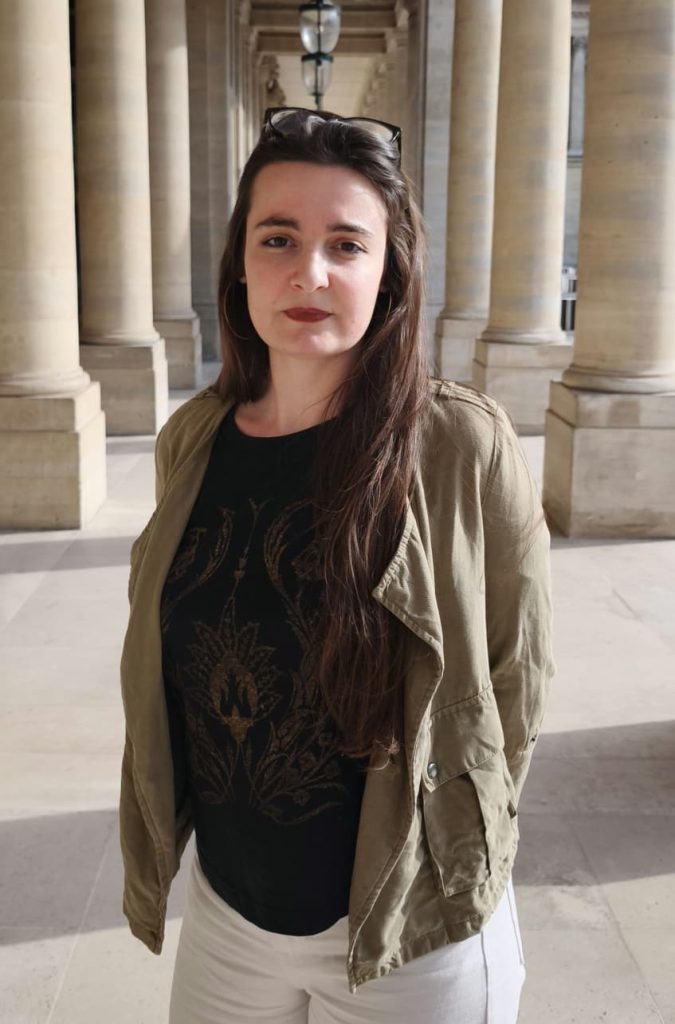
Hosted researchers
Shadia ABDRABO
Senior Curator at the Sudan National Museum in Khartoum and archaeologist at the National Corporation for Antiquities and Museums Hosted at the INHA since 2025.
Mahya TOORANPOOR
PhD in Islamic Architecture (2026, University of Islamic Art, Tabriz, Iran).
Postdoctoral researcher hosted at the INHA (National Institute of Art History) since June 2026.