-
Barakat Trust
The Barakat Trust offers seven grant categories, each with its own application form and specific criteria. A1 – Barakat International Studentship: a scholarship of up to £25,000 for a student from the Islamic world already accepted on a taught Masters course in a subject relevant to Islamic art or architecture. A2 – Postgraduate Student & Early Career Award: an upper limit of £2,500 towards costs of travel for research, open to early career scholars on topics relating to the history of art, archaeology and conservation, among others. A3 – Barakat Major Awards: an upper limit of £10,000 for fieldwork, conservation, exhibition or training projects, for scholars attached to research institutions,…
-
Syrian Heritage Archive
Project type Archiving, Documentation Institution type Museum Parent institution Museum for Islamic Art/ Staatliche Museen zu Berlin Geographic area Syria Website https://syrian-heritage.org/ Summary The systematic archiving of photos, plans, maps and reports is of fundamental importance for the documentation of Syrian cultural and natural treasures. The research carried out since the 20th century by the Museum für Islamische Kunst in Berlin, the German Archeological Institute (DAI), and by other researchers has yielded copious materials in relation to numerous sites of significance for archaeology in Syria and the history of Syria’s architecture. These materials are digitized by the Syrian Heritage Archive Project and, along with other born digital materials, integrated into…
-
European Heritage Days | Exhibition “Endangered Heritage, Imperiled Research: The INHA Collections in the Service of Research on Inaccessible Regions”
📅 19–20 September 2026 📍 INHA, Salle Labrouste
-
Doctoral Study Day | Conducting Doctoral Research on Inaccessible Regions
📅 11 June 2026, 2:00pm–6:00pm 📍 INHA, Salle Peiresc
You May Also Like

European Heritage Days | Exhibition “Endangered Heritage, Imperiled Research: The INHA Collections in the Service of Research on Inaccessible Regions”
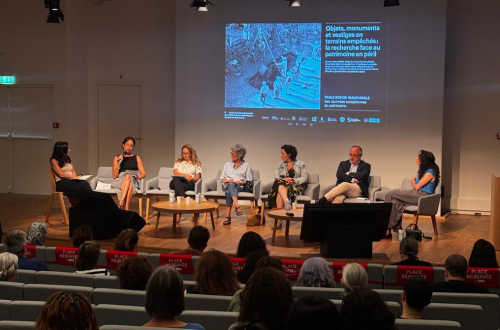
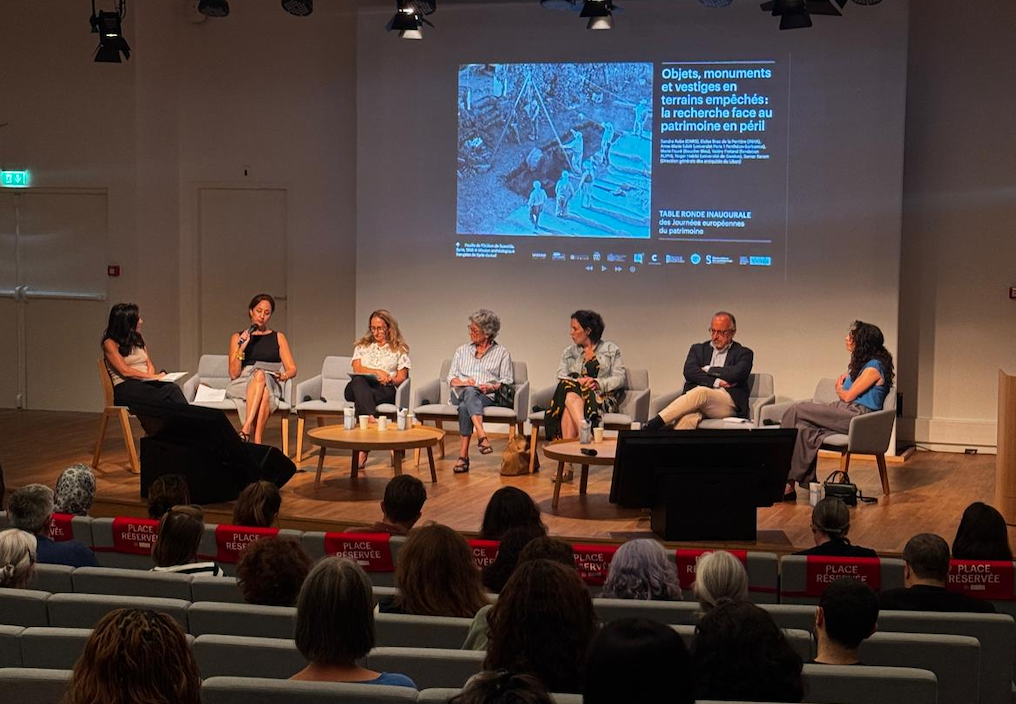
European Heritage Days | Round Table “Objects, Monuments and Remains in Inaccessible Fields: Research and Heritage at Risk”

Blue Shield France 25th Celebration – Solidarité et Protection du Patrimoine
-
European Heritage Days | Round Table “Objects, Monuments and Remains in Inaccessible Fields: Research and Heritage at Risk”
📅 September 15, 2026, 6–8 PM 📍 INHA, Jacqueline Lichtenstein Auditorium
-
Blue Shield France 25th Celebration – Solidarité et Protection du Patrimoine
📅 16–17 June 2026 📍Musée d’Art moderne et contemporain de Strasbourg
-
Gaza Histoire
Project Type Documentation Institution Type University Methods OSINT Geographic Area Palestine Website https://gazahistoire.hypotheses.org/ Summary Gaza Histoire, which inventories bombed heritage, is a scholarly project hosted on the Hypothèses platform and supported by researchers in history, geography, archaeology, and the social sciences. It seeks to document and inventory heritage sites in the Gaza Strip that have been damaged or destroyed, combining work with archives, other sources, and collective investigations. The project offers site-specific articles, databases, and historical analyses in order to preserve memory of Gazan heritage and to understand its transformations over time, through a process that is both scientific and a way of promoting public knowledge.
-
Safeguarding the Heritage of Syria and Iraq (SHOSI)
Project Type Conservation Training Institution Type Museum Parent Institution Smithsonian Museum Geographic Area Syria, Iraq Website https://global.si.edu/projects/safeguarding-heritage-syria-and-iraq-shosi Summary Safeguarding the Heritage of Syria and Iraq (SHOSI) is an international initiative by the Smithsonian Institution that seeks to document and protect threatened cultural heritage in Syria and Iraq. It brings together several partners (including the Penn Cultural Heritage Center and scientific and humanitarian organizations) to carry out research, training, technical interventions, and public education programs. The project helps local museum and heritage professionals document damage, secure collections, and develop emergency protocols.
-
Rafekatuna
Project Type Documentation, Conservation Institutional Type NGO Parent Institution Heritage for Peace Geographic Area Syria Website https://www.rafekatuna.org/ Summary The Rafekatuna project is a research initiative dedicated to the documentation and protection of cultural heritage in Raqqa (Syria), severely damaged by recent conflict. It combines inventories, damage assessments, local training, and emergency conservation efforts. The project brings together international institutions with the participation of local communities in order to reinforce public awareness and ownership of heritage sites.
-
Nordic Center for Cultural Heritage and Armed Conflicts
Project Type Consulting, Research Institution Type Research Center Parent Institution University of Copenhagen, NATO Website https://www.heritageconflict.org/ Sumary The Nordic Center for Cultural Heritage and Armed Conflict (CHAC) is a research center that assists international organisations, governments, military organisations, and museums to understand and develop better approaches to the developing role of cultural heritage in contemporary armed conflicts. It functions as a platform for knowledge exchange between researchers, expert communities, and state authorities, combining the human sciences and public policy. Founded in 2017, the center extends a NATO project on cultural heritage protection in military operations..